Russian English German Norwegian Swedish Finnish
SAAMI. SU - informal site about Saami of Kola peninsula
Reindeer - Kola peninsula
Main News Guest book Forum Map of site Russian English
To support the project > Site News > Lovozero > Photo galleries > About... > Introduction > Applied and fine art  [X]
Russian Saami -> Saami -> Introduction
Maps from Google Earth
LOVOZERO Events
Weather
Transport
Hotels
Map village

Visitors on a site: 8
  record: 129
Hosts today: 252
  All hosts: 14957
Hits today: 250
  All hits: 157272
Форум народа саами Самь нураш = Sami nurash

Introduction


Photoalbum
Photoalbum
 T 
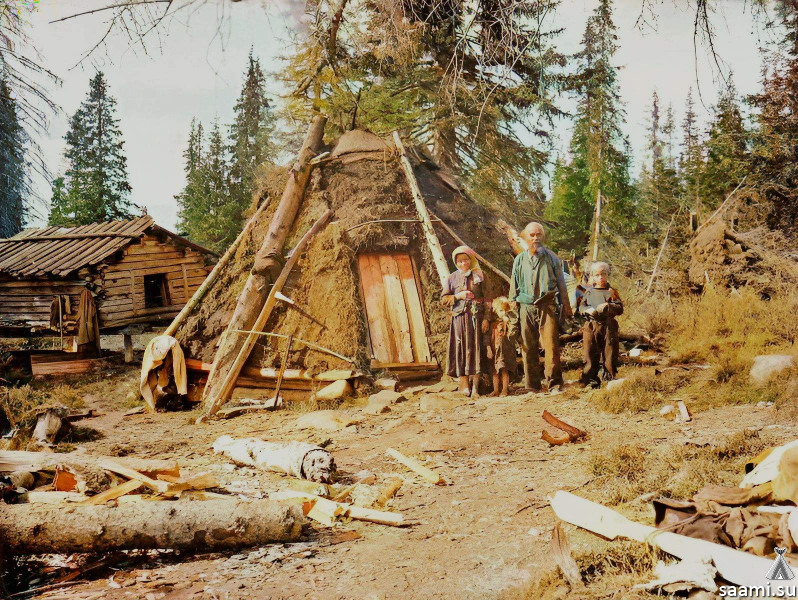
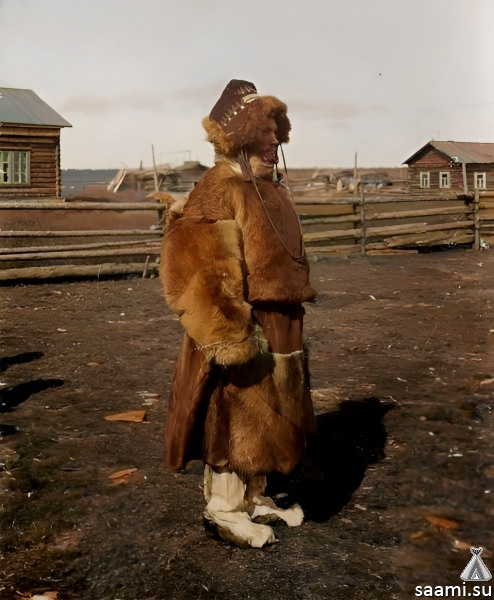
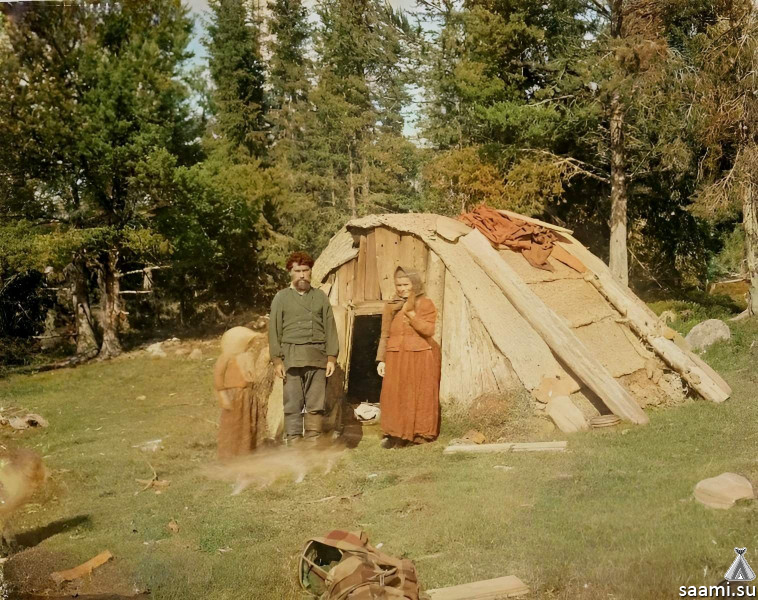
he Saami is a small nation of northern Europe. Their population is 31 thousand people. The majority of the Saami inhabit the north of Norway, Sweden and Finland (more than 29 thousand people). Some part of the Saami lives in Russia, on the Kola Peninsula (1,9 thousand people).

The Kola Saami call themselves "saami", "saam`", "same"; the Scandinavian Saami - "samelats" and "samek". The Saami got their other name "laplanders" from their neighbours - Finnish and Scandinavian people, who later brought this name to the Russians. We first meet the name Lappia in written works by Sakson Grammatik (end of the 7th century), and in Russian sources it appears starting from the end of the 14th century. Some researchers (T. I. Itkonen) derive such words as "lop`" and "laplander" from Finnish "lape" and "lappea" meaning "side", others (E. Itkonen) connect it with Swedish "lapp" meaning "place".

Recently the laplanders started to be called the Saami in both literature and everyday life.

The Saami language belongs to the Finn-Ugor language family, but takes a special place in it. Linguists distinguish in it some element which takes its origin from the Samodian languages.

Modern Saami language can be divided into several dialects which have significant differences between each other. Researchers divide all the Saami into western and eastern branches according to the language. The eastern branch includes some groups of the Finnish Saami ("inari" and "skolty") and the Kola Saami who speak three dialects: the majority speaks Iokan`gsky and Kildinsky dialects, smaller part - Notozersky dialect. The Saami of Russia also speak Russian nowadays.

The Saami can be divided into four economic-cultural types. The fist one includes a numerous group of the Saami living in mountains mostly in Sweden, as well as in Norway and Finland. They are mainly occupied with mountainous reindeer-breeding and lead a nomadic way of life. The second one includes the Saami settled down on seacoasts and coasts - the majority of the Saami of Norway. Their main occupation is sea fishing: in summer and autumn - catching of salmon, in spring - catching of cod near the coast. The third type includes the Saami living in the forest. They inhabit forest areas of Sweden and Finland and are mainly occupied with hunting wild reindeer and fur-bearing animals as well as forest reindeer-breeding. They lead a nomadic way of life.

The Saami of the Kola Peninsula form a completely independent ethnographic group which is called the Kola Saami (laplanders). They can be related to the forth type of the Saami who are occupied with reindeer-breeding, fishing and hunting and who lead a semi-nomadic (settled in the last several decades) way of life.

Ancient history of the Saami hasn`t been studied enough. Archeological excavations held on the northern coast and southern parts of the Kola Peninsula revealed several stands of ancient people characterizing the human activity at these places in different historical periods.

In the far north-western part of the Kola Peninsula - on the Rybachy Peninsula - Zemljakov B. F. and Tretjakov P.N. found in 1935 the peculiar culture of Arctic paleolith, which is also widespread on the territory of northern Norway (culture of Koms). These ancient stands situated along the ancient seacoast lines date back to the 7th-5th millennium BC.

The researchers of the Kola neolith were Rihter G. D., Egorov S. F., Shmidt A.V. and Goretsky G. I. The most recent work in this direction has been done by Gurina N.N.

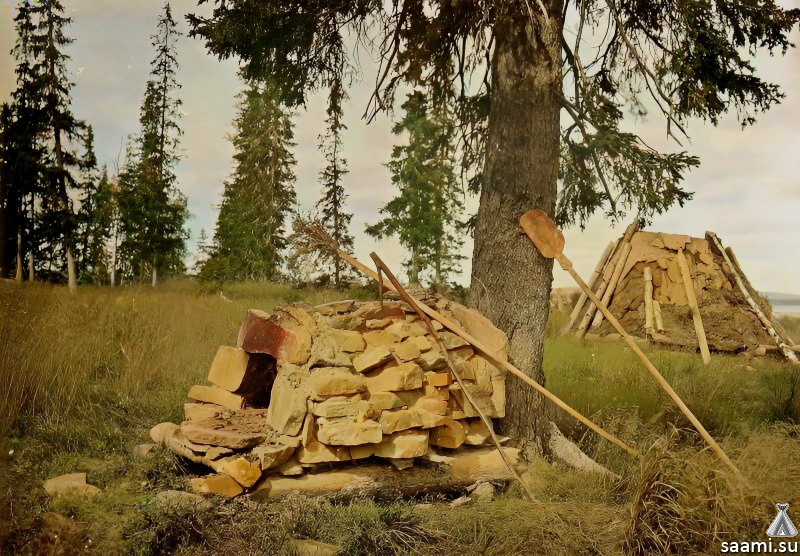
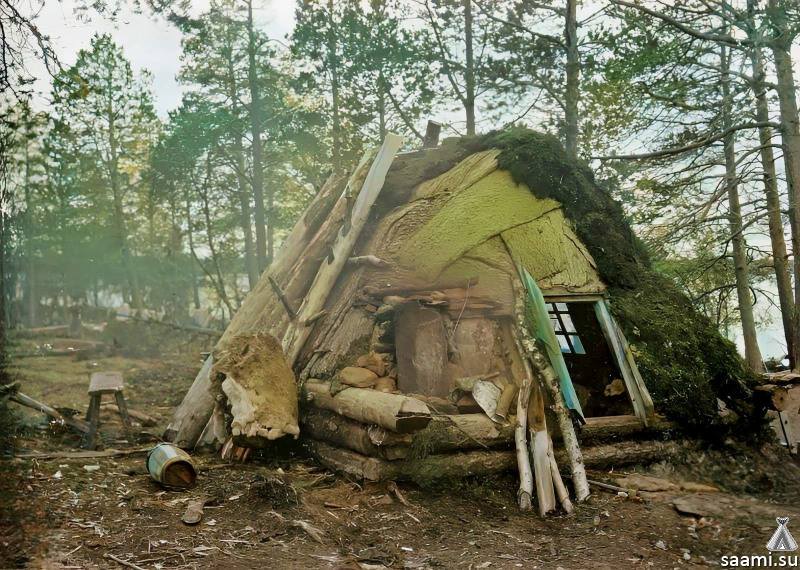
Neolithic monuments of the Kola Peninsula date back to the 3rd-2nd millennium BC. The ancient population who left them probably consisted of people occupied with fishing and hunting sea and land animals and leading semi-nomadic way of life. Remnants of summer, season settlements, situated in coastal areas, and of autumn-winter settlements, built for longer periods of time and situated 3-4 kilometers from the sea, were found in northern coastal regions of the peninsula. Remnants of dwellings of a mud-hut type were found at these stand places. As Gurina N. N. says, the inhabitants of these stands were the ancestors of modern Saami.

Ancient culture of the Kola Peninsula resembles Neolithic monuments of Karelia, mainly of north-eastern shore of the Onezhskoe Lake. Researchers think that people inhabiting the Kola Peninsula came from north-eastern part of Karelia. Archeologists say that the Kola Peninsula started to be inhabited not earlier than the 2nd millennium BC.

The Saami were first mentioned under the name of Finnish people by a Scandinavian traveler Ottar who visited the White Sea coast in the 9th century.

The name "lop`" appeared in Russian sources only in the end of the 14th century. Before it such names as "tre" and "tr" (meaning "Ter side") could be found. Starting from the 15th century facts about the Saami began to appear in papers, laws, written books of Novgorod and other written documents (mentioning about "wild laplanders", etc.).

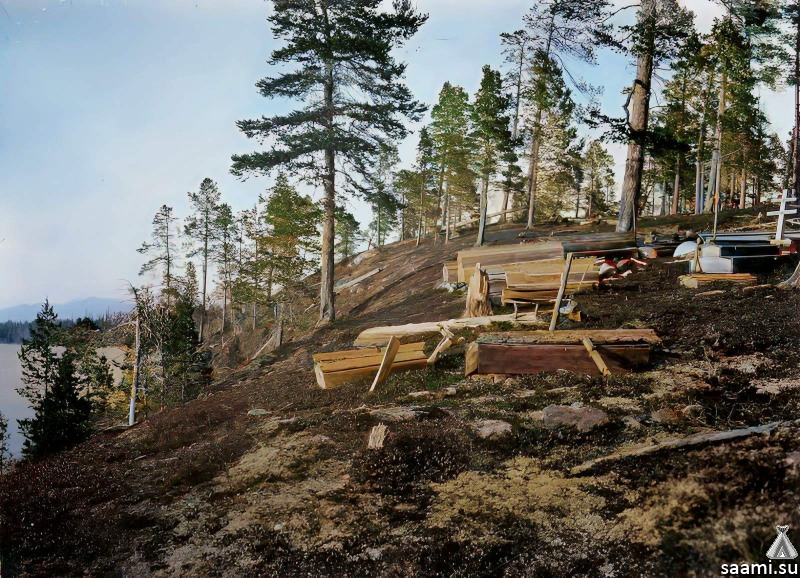
Already in the 16th-17th centuries the ancestors of the Kola Saami inhabited a rather big territory where modern Karelia is situated. The facts that confirm this are written books of Novgorod which mention the Saami`s graveyards in Zaonezhje. When the Karely moved to the north the Saami were gradually forced out from their lands. But according to handmade maps, preserved from that period, already in the middle of the 18th century there were two Saami`s graveyards in northern Karelia: Orjezersky on the river Chumcha to the west from Kovdozero and Pjaozersky on the south-eastern shore of the Rugozero. In the end of the 18th century Ozeretskovsky N. also spoke about the existence of Pjaozersky graveyard where 78 male Saami people lived.

Documents of later period mention the fact that the Saami inhabited only the territory of the Kola Peninsula. In the end of the 19th - the beginning of the 20th centuries the Saami inhabited almost the whole peninsula, except for a part of the Tersky coast - from Kandalaksha to the river Pjalitsa, where Russian population predominated.

Patrimonial structure of the Kola Saami is not known. One of the documents dating back to the second part of the 17th century mentions the graveyards situated in central, eastern and north-eastern regions of the Kola Peninsula (Voronensky, Lovozersky, Semiostrovsky, Iokan`gsky and Ponoisky) where the so-called "ter laplanders" lived. The rest of the population inhabiting western regions belonged to "konchanskie laplanders". Charnolusky V.V. has an opinion that only the following Saami belong to the so-called "ter laplanders": Iokan`gskie, Kamenskie, Ponoiskie and Sosnovskie characterized by common peculiarities of culture. Lovozerskie, Semiostrovskie and Voronenskie Saami form a special so-called middle group, which differs from the "ter" one. The Saami living in western part of the Kola Peninsula ("konchanskie laplanders" according to the terminology of the 17th century) form the third group, which is not so united concerning their language and culture.

The Novgorodtsy (people from Novgorod) first appeared on the Kola Peninsula and the White Sea coast in the 12th century. First mentioning of the inhabitants of the Tersky coast paying tax to the Novgorodtsy dates back to 1216. In the end of the 8th- the beginning of the 14th centuries the Novgorodtsy inhabited the whole territory of Kola Lapland.

Starting from the 15th century when Novgorod lost its power Lapland began to be closer to Moscow Great Principality and then joined recently appeared Russian State. Since that time Christianization of the Saami began. There is a written report dating back to 1526 about Christianization of "wild laplanders" living on the Kandalagskaya bay where the Church of Ivan Predtecha`s Birth was built. The Pechengsky monastery played a great role in spreading of Christianization among the Saami; it was built in 1550 by Trifon called Pechengsky. In 1556 two Saami`s graveyards - Pechengsky and Motovsky - started to belong to the monastery according to Ivan the Great`s law, and the Saami living there were included into the number of monastery peasants. Besides, the monks of the monastery started to explore the surrounding industrial places. The Pechengsky monastery existed till 1764.

Christianization of the Saami is also connected with the activity of the Solovetsky monastery, which possessed several industrial places on the Kola land: in Kildinsky graveyard, on the Teriberskaya bay, etc.

The second part of the 16th century is the beginning of Christianization of the Terskie Saami. According to Ivan the Great`s laws dating back to 1575 and 1581, Peter and Pavel`s Church was built in the mouth of the river Ponoi. In the 17th century industrial places belonging to the Antonievo-Sinijsky monastery (near the river Ekonga), the Krestny and Voskresensky monasteries (near the rivers Ekonga and Ponoi) appeared on the territory where the Terskie Saami lived.

The monasteries` religious and missionary activity was soon substituted by economic and trade. The monasteries became important trade and economic centers of the region. Together with the Pomor merchants they were the main consumers of production given by local industries (reindeer-breeding, fur-bearing animals, fishery and sailing) as well as they both used the local population as work force.

The Saami`s social life preserved features of the primitive communal system till the 20th century. All the Saami population of the Kola Peninsula consisted of several communities (Lovozersky, Semiostrovsky, Iokan`gsky, etc.) which probably formed some territorial units. Each Saami community had its own settlement - graveyard. The majority of communities had two graveyards: summer and winter.

There is no statistical data but they say that in the first decades of the 20th century only inhabitants of different graveyards could marry.

The Saami preserved the tradition of sharing the booty and helping each other. All the industrial places and hunting areas, as it is said in documents dating back to the end of the 19th - the beginning of the 20th centuries, were divided between graveyards and could only be inherited.

At the same time in the beginning of the 20th century the division of property and social inequality appeared. There was no hiring of work force as such, but the Saami who had few reindeer worked as reindeer-breeders for those who owned much more numerous herds.

The Saami were introduced to the system of commodity-money relations . A. Ja. Efimenko describes the dependence of the Saami upon the Kola and Pomor merchants, who "captured the Saami`s sources of products, fishing tackles, salt, gunpowder and other necessary things. The merchants paid the state tax instead of the Saami. As a result the Saami became eternal debtors of the Kola and Pomor merchants." The later used the best fishing places paying contemptible sums of money for them and bought fish and furs again paying the same fee.

In the end of the 19th - the beginning of the 20th centuries the territory on which the Saami lived was divided into two districts (volost`) according to their administrative state: the Ponoiskaya volost` (with authorities located in the settlement Ponoi) and the Koljsko-Loparskaya volost` (with authorities located in Kola). These districts included the Saami`s graveyards. The Ponoiskaya volost` included the Saami who lived in north-eastern parts of the Kola Peninsula and the following graveyards: Sosnovsky, Kamensky, Iokogan`sky, Lumbovsky and Kuroptevsky.

All the rest of the Saami, who lived in the areas situated to the west, belonged to the Koljsko-Loparskaya volost` which included the following graveyards: Ekostrovsky, Kildinsky, Babensky, Motovsky, Pazretsky, Pechengsky, Lovozersky, Voronensky, Semiostrovsky and Songelsky.

The establishing of the Soviet power on the Kola Peninsula took place in February 1920. In 1927-1928 rural councils (sovets) of the Murmansk region, situated in areas inhabited by the Saami, were transformed into native Saami councils which functioned on the basis of "Temporary act on management of native nations and tribes living in northern areas of the USSR" passed in 1926. In the middle 1930s all the Saami territories were divided into two national regions: the Saami and the Lovozero with population consisting of the Saami, Komi, Nenetz and Russians.

At the moment greater part of the Saami live in the Lovozero region (it was united with the Saami region in 1964).

In the end of the 19th - the beginning of the 20th centuries the Kola Saami didn`t live isolated but communicated actively with each other and even lived together with other nations. The Saami have had contacts with the Russians for more than 800 years.

Except for the Russians the following nations lived nearby the Saami: Finnish people and the Karely (mainly in south-western part of the peninsula), the Komi and Nenetz (mainly in eastern parts). The Izhemtsy and Nenetz came to the Kola Peninsula from the Izhemsko-Pechorsky region in the late 80s of the 19th century. They also brought their reindeer herds with them.

In later decades of the 20th century the national structure of the Murmansk region became even more mixed. However, the Saami haven`t dissolved among the other nations but, on the contrary, are still keeping their mothertongue and ethnic consciousness.

The Saami are people of peculiar culture. This peculiarity, which is impossible to explain, has made the Saami some kind of a mystery which has attracted the researchers` attention since earlier times.


Find
Гидрометцентр России - Ловозеро
Аnother
Exchange rates of CB RF for 10.09.2010:

USD / RUR - 30.8801
EUR / RUR - 39.1868
10 NOK / RUR - 49.7096
10 SEK / RUR - 42.3119

Casual photo
Вороны над базой Карозеро...
Вороны над базой Карозеро.... А.Кузьменко
In a photo gallery
 Как Вам сайт ? 

 Хорошо
 Не плохо
 Не очень
 Можно было бы и получше

Результаты
Holidays (In Russian)
Сегодня:
Всемирный день предотвращения самоубийств; Обретение мощей преподобного Иова Почаевского
Завтра:
Победа русской эскадры над турками у мыса Тендра (220 лет); Усекновение главы Иоанна Предтечи; Поминовение воинов
Ближайщие:
• Через 2 дня 12.09.2010: Перенесение мощей Святого князя Александра Невского; День танкиста; Международный день памяти жертв фашизма; День города Тула (864 года); День города Калуга (639 лет); День города Челябинск (274 года); День города Городец (858 лет); День города Волгоград (421 год); День города Красногорск (78 лет); День города Егорьевск (548 лет); День города Елец (864 года).
• Через 3 дня 13.09.2010: День программиста.
• Через 4 дня 14.09.2010: Освященное время Церкви: церковное новолетие и миротворный круг.
• Через 5 дней 15.09.2010: День HR-менеджера (управление персоналом) (7 лет).
Joke/phrase not in a theme (In Russian)
Что-то не рассчитали физики - коллайдер построили в Швейцарии, а черная дыра образовалась на Уолл Стрит.
Russian Saami -> Saami -> Introduction
Rambler's Top100
In favourites  Feedback   Copyright © 2007-2010 by A.Yurjev, Lovozero  
At use of materials the link to a site www.saami.su is obligatory  
Locations of visitors to this page